
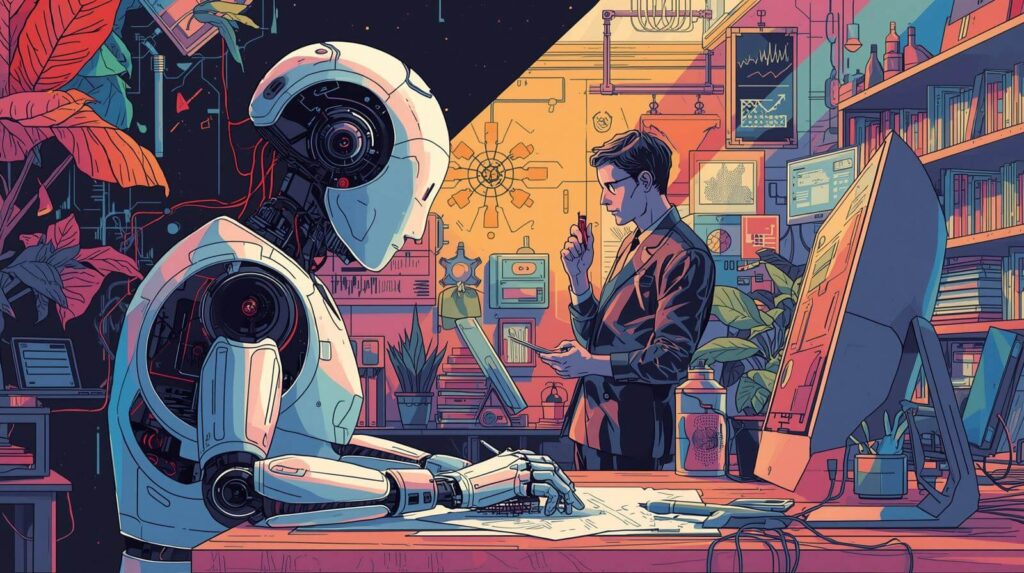
In today’s fast-moving digital world, the debate around AI vs Human often appears like a competition — as if we must choose one side. But the reality is far more nuanced. AI is becoming a powerful tool that changes how we work, create, and communicate. At the same time, human creativity, emotion, and intuition continue to shape the soul of digital experiences. This article explores how AI and humans can coexist, complement each other, and build a more meaningful future in the creative and digital ecosystem.
Understanding the “AI vs Human” Perspective
The conversation around AI vs Human usually starts with fear: Will AI replace us? Will machines produce better art, write better content, or design faster websites?
But here’s the truth — AI is not here to erase human creativity. It enhances it.
Artificial Intelligence works based on patterns, data, and instructions. It can automate repetitive tasks, accelerate production, and even generate content or visuals in seconds. But it does not possess lived experience, emotion, or the instinct that humans bring into their creative decisions.
A practical example: when designing a brand identity, AI may build dozens of layout options quickly. But humans understand culture, emotional color meaning, and narrative nuance — elements that make the design feel alive.
For example, if you’re developing a brand concept like Green Adventure Studio, the emotional storytelling and adventure-driven spirit behind it still require human touch.
AI is a tool. Humans are the storytellers.
Why the AI vs Human Debate Still Matters Today
Even though AI evolves every year, it has limitations. It doesn’t understand context the way humans do. AI cannot feel frustration, joy, hope, nostalgia — all the things that influence creative work. It cannot interpret cultural sensitivities unless it has learned it through examples.
Humans remain essential for:
1. Emotional Intelligence in the AI vs Human Dynamic
AI doesn’t feel empathy. It can’t sense when an article needs a softer tone or when a design must evoke comfort. Humans make those decisions naturally.
2. Ethical Judgment That AI Still Cannot Replace
From bias to misinformation, AI requires human oversight. People analyze whether outputs are fair, safe, or appropriate.
3. Original Insight
AI predicts based on the past. Humans imagine what has never existed. Innovation still starts with us.
How AI Supports Human Creativity in the AI vs Human Workflow
On the other hand, humans working without AI miss out on efficiency, speed, and new opportunities.
AI empowers humans by:
1. Automation That Enhances the AI vs Human Collaboration
Editing, resizing images, tagging content, SEO suggestions — AI handles these instantly so creatives can focus on strategy.
2. Enhancing Research & Brainstorming
AI can summarize trends, provide references, and help generate ideas faster.
For example, tools like Google Analytics or Ahrefs use AI-driven insights to analyze behavior and SEO direction.
3. Increasing Productivity
AI can produce drafts, give layout suggestions, and assist in organizing workflow.
This is particularly helpful for digital creators, font sellers, and online shops. If you’re building a site using plugins like ProductX, AI can help recommend layout structures before you refine them.
AI is not a replacement — it’s an accelerator.
AI vs Human in the Creative Industry: Collaboration Wins
Instead of thinking about AI vs Human as a battle, it’s more productive to frame it as AI + Human.
Some of the strongest industries today rely on hybrid creativity:
• Content Creation
AI drafts. Humans add personality.
AI structures ideas. Humans shape the narrative.
This blended workflow increases quality and efficiency — a perfect fit for blog-driven creative studios.
• Design & Branding
AI helps generate variations fast.
Humans curate the vision and emotional resonance.
• Digital Marketing
AI analyzes data.
Humans build strategy and messaging.
This combination creates a complete system: logical + emotional, fast + thoughtful.
Ethics and Trust: The Human Advantage
The rise of AI also brings concerns — deepfakes, misinformation, synthetic media, stolen designs. This is where humans remain the gatekeepers of trust.
A responsible digital creator always ensures transparency. Many reputable sources highlight the importance of ethical AI usage, including organizations such as the Partnership on AI, which promotes responsible innovation across the globe.
By understanding both the power and risks of AI, we can build digital content that is not only efficient but also trustworthy.
How to Adapt in the AI Era (Without Losing Yourself)
The key is not to fear AI but to learn how to use it wisely. Here are practical steps to adapt:
1. Use AI Only as a Starting Point
Never publish raw AI output.
Instead, personalize it — inject your voice, adjust tone, add story.
2. Build Skills That AI Cannot Replicate
Empathy, storytelling, leadership, emotional design, strategy — these remain human strengths.
3. Stay Curious and Keep Learning
The digital world changes fast.
Platforms like Google Digital Garage offer free learning resources about digital skills.
4. Focus on Authenticity
Your experiences, your voice, your point of view — AI can never copy them.
AI vs Human: The Future Is Shared
The future of work isn’t about humans or AI taking over, but about collaboration. AI performs the heavy lifting; humans bring depth and meaning. When both sides work together, the result is richer, faster, and more impactful.
This is especially true in digital businesses like creative studios, online font stores, or content-driven websites — where authenticity and emotional value are just as important as efficiency.
If you want an example of how humans and AI can work together to build a beautiful, functional website, check out our website:
How to Structure a Creative Homepage for Green Adventure Studio
When AI and humans collaborate, creativity becomes limitless.
Conclusion
The debate around AI vs Human isn’t truly a fight — it’s an evolution. AI expands our capabilities, while humans provide the depth that machines can’t replicate. When both strengths combine, they unlock new levels of innovation and digital storytelling.
The future isn’t AI replacing humans…
It’s AI empowering humans.